Overview of Main NLP Tools
Have you ever felt there must be a manual for the human mind? Neuro-Linguistic Programming (NLP) is precisely that: a fascinating collection of models and techniques that map out how we think, communicate, and change. The NLP tools listed here are the core tools of this transformative field. Think of this page as your map to the territory of NLP. Each entry is a starting point—a brief glimpse into a powerful concept designed to make you curious, perhaps even a little intrigued by what you don’t yet know. The real depth, the step-by-step “how-to,” awaits on the dedicated pages linked below.
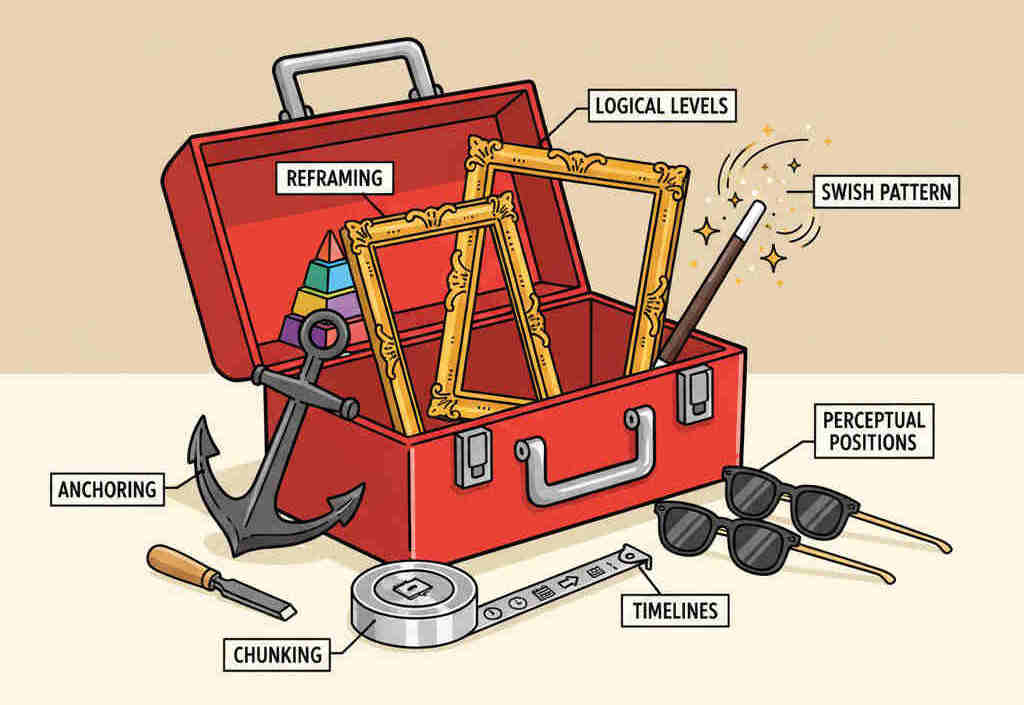
1. Presuppositions of NLP: The Operating Beliefs
Before learning any of the NLP Tools or techniques, we have to adopt and understand the presuppositions of NLP.
NLP’s presuppositions are not claimed as “truth,” but as axioms that create effective action. One of these presuppositions is “The Map is Not the Territory.” In other words, “The menu is not the meal.” Your internal map of the world—shaped by beliefs, memories, and filters—is not the reality itself. It’s just your personal, limited representation of it.
This single presupposition explains countless conflicts: two people experience the same event yet have completely different maps of it. The freedom comes when you realize you can update your map. If your current map leads you to a place of stress or limitation, you’ll learn to have the power to redraw your Map. This foundational idea makes all other NLP tools possible.
2. Making Rapport: The Bridge of Connection
Making Rapport is the natural unconscious dance of mutual trust and understanding. It’s that feeling of being “in sync” with someone you are close to. NLP goes beyond a simple advice like “be friendly.” It reveals the unconscious patterns that create this connection, and made it to one of most important NLP Tools.
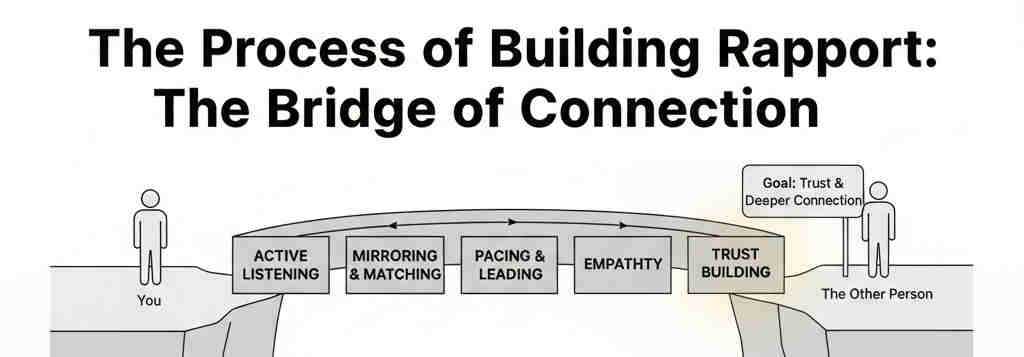
We subtly match and mirror body language, tone of voice, and even breathing rhythms. We listen for a person’s preferred “sensory language” (do they see your point, grasp the concept, or like the sound of an idea?). True rapport is respectful pacing and leading to create a bridge where real communication and trust can flow effortlessly. It is the essential NLP tool and for coaching, therapy, sales, or any meaningful relationship.
3. Anchoring Techniques: Installing Your Triggers for State
Did you ever smell something that immediately brings you back to an experience in the past? Instantly the smell triggers a certain past experience. When this overcomes you, it’s called a Trigger. What if you could feel state of confidence just at the touch of thumb and forefinger? Or access calm by simply touching your wrist? That are called Anchors. Anchoring is one of the NLP Tools covering is the process of linking a specific, intense internal state (like peak confidence) to a unique external trigger (a touch, sound, or image).
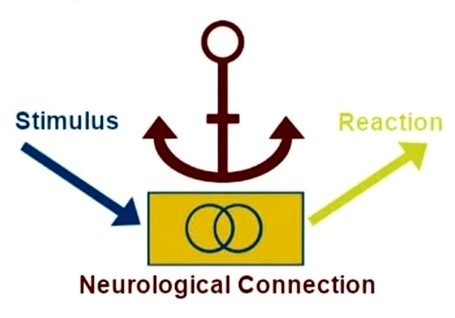
Like a Pavlovian (the dog) response for your own chosen states, it works because our neurology naturally makes these links (a smell or song instantly recalls a past emotion). NLP teaches you to create these anchors consciously and precisely. You learn to “collapse” negative anchors from the past and “fire” resourceful ones for the future, giving you direct access to your best states whenever you need them.
4. The Meta-Model: The Language of Precision
Language can obscure or clarify. The Meta-Model is a set of specific questions designed to recover the deep structure of experience hidden within our vague, everyday language. When someone says, “I’m stressed,” the Meta-Model asks: “About what, specifically?” When they say, “I can’t do this,” it asks: “What stops you? What would happen if you did?”
It challenges deletions (“I’m upset”), generalizations (“Everyone ignores me”), and distortions (“She made me angry”). By questioning the linguistic fog, you help yourself and others reconnect with specific sensory-based reality, reclaim personal agency, and open up choices that vague language had seemingly locked away. The meta model is a process of Down-Chunking, one of the other NLP Tools. From a vague whole to specific details.
5. The Milton-Model: The Language of Influence
Named after the master hypnotherapist Milton H. Erickson, this is the artful counterpart to the precise Meta-Model. Where the Meta-Model seeks specificity, the Milton-Model uses artfully vague language to speak directly to the unconscious mind. It is the process of Up Chunking.
From specific to vague. It uses metaphors, stories, and suggestions like: “And you can begin to wonder how quickly you will notice a new sense of calm…” or “As you sit there, listening to the sound of my voice, you might recall a time when you felt truly resourceful…”
It is not about control, but one of the excellent NLP Tools, uses suggesting and pacing and leading a person’s experience, allowing their own unconscious mind to find the most appropriate meanings and resources. It’s the language of gentle, respectful trance induction and therapeutic change.
6. Perceptual Positions: Seeing Through Different Eyes
Stuck in an argument or a difficult decision? Another of effective NLP Tools. It suggests there are at least three perceptual positions to any experience. First Position is your own point of view, seeing through your own eyes, feeling your own feelings. Second Position is empathy—stepping fully into the other person’s shoes, seeing the world as they see it, understanding their perspective. Third Position is the detached observer view, like watching a movie of the interaction from a neutral standpoint.
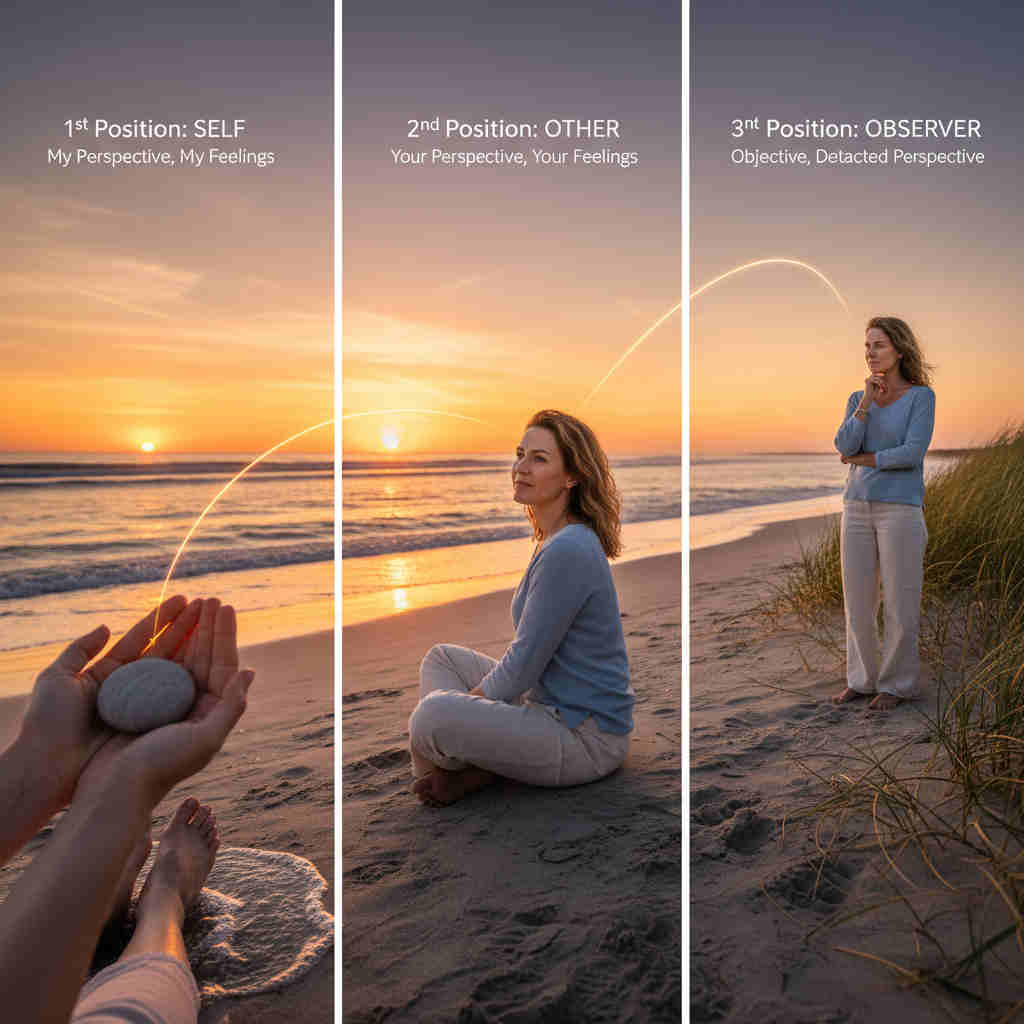
Wisdom and flexibility come from the ability to move consciously between these positions. Getting stuck in First Position creates selfishness; in Second, overwhelm; in Third, dissociation. Flowing between all three creates understanding, choice, and ecological outcomes.
7. The SMART Outcome Model: The Framework for Well-Formed Goals
Wanting something isn’t enough; a well-formed goal is a designed outcome. NLP’s outcome framework ensures your goals are ecologically sound and achievable.
One of the NLP Tools that guide you to state goals in the positive (what you want, not what you don’t want), make them sensory-specific (how will you know when you have it?), ensure they are self-initiated and maintained, identify the necessary resources, and check the ecology—will achieving this goal preserve the good things in your life and fit with your wider system? This model moves you from vague wishing (“I want to be happy”) to a clear, actionable, and compelling target. (Up Chunking)
8. The TOTE Model: The Blueprint for Strategies
How do you know when to stop hammering a nail? You Test, Operate, Test, and Exit. The TOTE (Test-Operate-Test-Exit) model is a feedback loop that describes any mental or behavioral strategy. First, you Test current state against a desired state (is the nail flush?). If there’s a difference, you Operate to change it (hammer). Then you Test again. This loop continues until the test is passed, and you Exit.
This can used to control all NLP Tools whether the outcome has been achieved. It is used this to “unpack” people’s strategies for everything from motivation to decision-making. By modeling (One of the NLP Tools you will learn in the Master Practitioner) TOTE of an expert, you can replicate their internal success program. By altering a step in a flawed TOTE (like an endless “test” for perfection), you can change the entire outcome.
9. Reframing: Changing a Frame’s Meaning
The meaning of any event depends on the “frame” you put around it. A rainy day is a “frame.” Within the “picnic” frame, it’s negative. Within the “garden” frame, it’s positive. Reframing is changing the frame to change the meaning, and thus the response. In a simple linguistic reframe, you shift the words. “I’m stubborn” becomes “You have strong perseverance.”
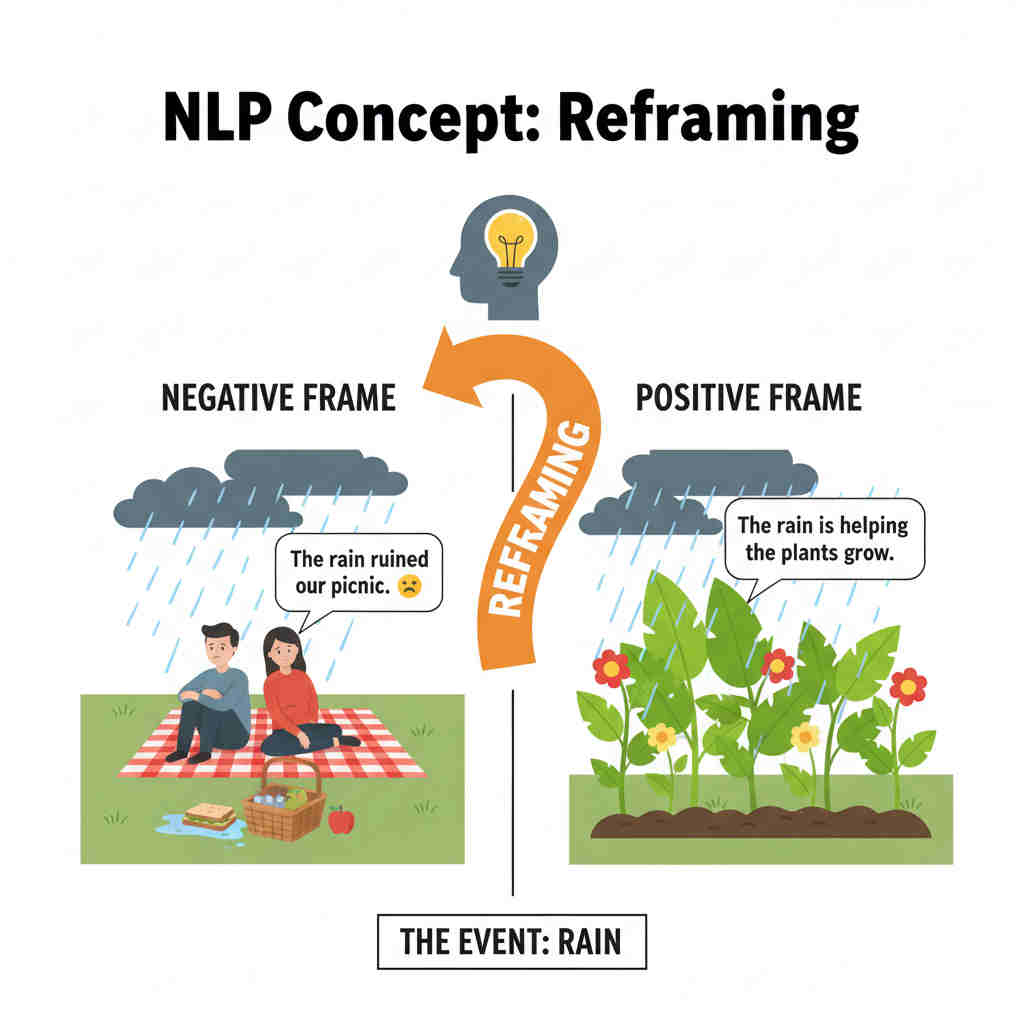
The facts are the same; the meaning and feeling transform. This opens the door to more complex NLP Tools like Six-Step Reframing, which works directly with unconscious parts to transform long-standing behaviors by finding their positive intent and updating how they get achieved.
10. Metaphors: The Unconscious Pathway
A metaphor is not just a poetic device; it’s a primary way the unconscious mind understands and organizes experience. Telling a client a story about a mountain climber who finds a new path can bypass conscious resistance and allow their mind to find its own parallels and solutions.
Metaphors work because they speak in the language of the right hemisphere and the unconscious: through symbols, relationships, and patterns. A skilled practitioner or coach uses metaphors to seed ideas, offer new perspectives, and facilitate deep, organic change without direct, and potentially resisted, instruction.
11. Timelines: How Your Mind Codes Time
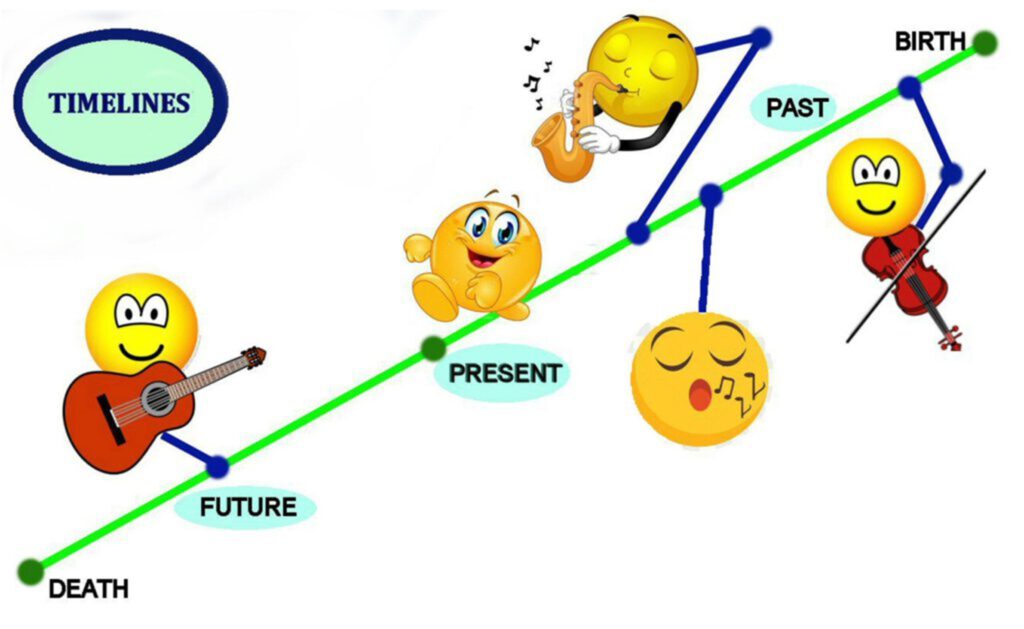
Do you see your past behind you and your future in front? Or is your past to the left and future to the right? We all have a subconscious spatial metaphor for time—a Timeline. Discovering your timeline (often through asking “Where is your past? Point to it.”) gives astonishing access to how you store memories and expectations.
More powerfully, you can edit this structure. You can “float above” your timeline to gain detachment from past traumas, or “step into” a future point to “pre-experience” the confidence of having already achieved a goal. It is a profound NLP tool for resolving the past and designing the future.
12. Logical Levels (Dilts): The Hierarchy of Change
The Logical Levels, developed by Robert Dilts, this model organizes experience into six natural levels: Environment (where, when), Behaviors (what), Capabilities (how), Beliefs & Values (why), Identity (who), and Spirit/Purpose (for whom, what else). A key insight: change at a higher level reorganizes everything below it.
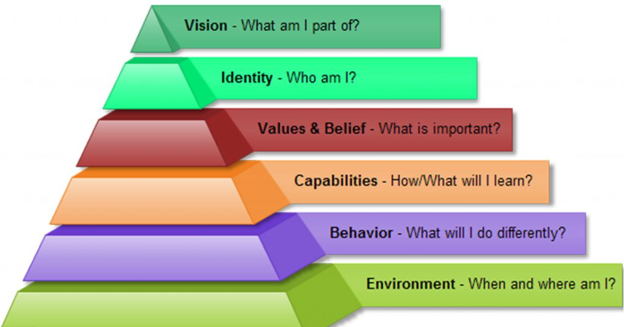
Trying to change a behavior (smoking) at the behavior level is hard. Addressing a limiting identity belief (“I am a smoker”) or connecting to a higher purpose (“I am someone who values vitality for my family”) creates sustainable, cascading change. It’s an essential diagnostic pattern, you can combine with all other NLP tools to ensure you are working at the most impactful level.
These are just a few of the countless NLP Tools you will learn in the NLP Practitioner. NLP Tools that you can use to develop yourself and help others. NLP Tools that will enrich your life and change it forever. Click on the links for more extensive break downs about the NLP Tools mentioned.